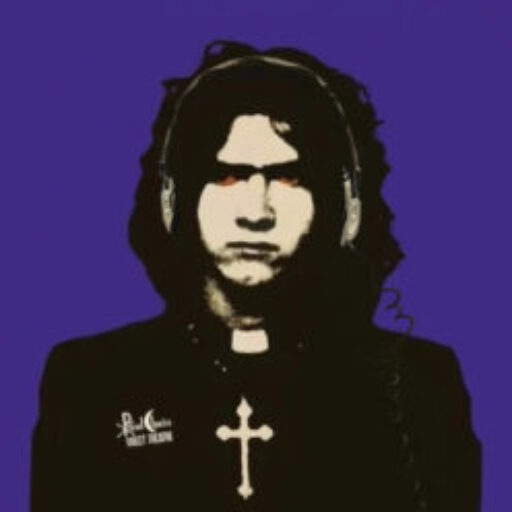
Doom Cinema: Sátántangó (1994)

When the Nobel Committee named László Krasznahorkai this year as the winner in the literature category, they spoke of his apocalyptic rhythm and circling prose. That description fits another figure just as well: the fellow Hungarian Béla Tarr, who, as a director, turned those sentences into long, unbroken visions. Together they built a language of paralysis, one in words and one in light & shadow.
Krasznahorkai wrote Sátántangó in the early 1980s. It was published in 1985, during the slow unraveling of Hungary’s socialist years. The collective farm at its center mirrors the end of that era: a world drained of purpose, yet still clinging to its routines. When Tarr began adapting the novel almost a decade later, the landscape outside the fiction had already crumbled in the same way. The film was released in 1994, stretching over seven hours, filmed in black and white, and composed of shots that last until time feels solid.
Tarr began his path much earlier, filming small stories of workers and tenants in state housing. His debut, Family Nest (1979), already carried the claustrophobia that would define him. The Outsider (1981) and The Prefab People (1982) followed, circling lives crushed by bureaucracy and fatigue. In Damnation (1988), he first worked with Krasznahorkai, who wrote the script, and with composer Mihály Víg, who created the music. Those three – director, writer, composer – formed a single structure that would hold for the rest of Tarr’s career.
Víg became more than a composer. His themes move inside Tarr’s films like memory. The accordion and piano lines in Sátántangó rise and fall with the same persistence as rain on tin roofs. He often appears within the films as well, usually as a drifter or observer, his face echoing the melancholy of his music. The melody of Sátántangó repeats until it loses tone and becomes atmosphere, an aftertaste of belief. In later works such as Werckmeister Harmonies (2000) and The Turin Horse (2011), Víg’s music becomes even sparser, reduced to a pulse that marks time.
Krasznahorkai’s Sátántangó takes place in a remote collective farm after the fall of its economy. The rain never stops. The buildings rot. Inside, a handful of people drink, plot, and wait for a sign of purpose. A rumor spreads that Irimiás, a man believed to be dead, is returning. The whisper moves through the village faster than the wind. Soon, the figure appears in flesh, walking out of the same mist that carried his name. His arrival is treated as a revelation. The villagers see in him a last source of order, a man who can give meaning to what has already fallen apart. He speaks with the calmness, and gathers them under a plan for renewal. They follow him, leaving behind their homes and livestock, walking through mud toward a promise that begins to fade the moment they move.

The book turns decay into a state of thought. Its sentences stretch for pages, moving in circles that blur one mind into another. The story is told through exhaustion… Krasznahorkai writes like someone measuring time by ruin. Tarr translates that rhythm into movement. The camera takes the place of the sentence. Long takes coil and uncoil through courtyards, empty rooms, and flooded roads. The eye is given no escape. Each gesture is held until it stops meaning anything, and until the plot is replaced by mere presence.
Seven hours pass through a single mood. Cattle trudge through mud, people drift between shelters, and wind erases their traces. The camera turns without interruption, forcing the landscape to speak. Time grows thick and heavy, collecting around the smallest details: a dripping pipe, a figure walking through fog, the sound of boots in wet soil.
The structure of the novel, twelve chapters moving forward and six moving back, returns in the film’s circular design. The last image leads to the first, like a reel wound upon itself. The circle is the form of regression. What begins in decay returns to it. It seems that Tarr uses this loop as the architecture of existence.
Damnation first tested this form, Sátántangó perfected it, and Werckmeister Harmonies extended it into metaphysical space. Tarr’s final film, The Turin Horse, reduced it to pure endurance: a father, a daughter, a horse, a storm, and six days before extinction. The movement across these films traces the same line, about what remains when movement itself becomes futile.
Within the realm of Hungarian cinema, Tarr stands both inside and outside its history. Filmmakers like Miklós Jancsó and István Szabó had already turned the camera toward control, revolution, and moral fatigue. Tarr inherited their visual patience but erased the collective ideals that once framed it. His camera does not trace power or history; it records aftermath. The broken farm in Sátántangó is what remained after every promise of progress failed. The fog, the pacing, the repetition, carry the exhaustion of a country watching its systems dissolve.
Hungarian cinema often relied on allegory. Tarr removed the need for allegory altogether. The mud, the rain, the ruins are not symbols. They are what is left when history loses meaning. His films belong to Hungary in soil and tone, yet they speak from a place beyond its borders. They describe humanity after the end of belief, filmed from the level of the earth itself.
In this continuum, Sátántangó stands as the core. It carries the full gravity of Tarr’s vision and Krasznahorkai’s prose before both reduced their language to silence. It is a film of persistence, where human life continues beyond reason.
The title itself – Sátántangó – explains the film’s motion. The “tango” describes its form: six steps forward, six steps back, twelve chapters arranged in a pattern that advances and retreats. The movement is circular, a dance that refuses progress. The “Satan” within it is not a creature of faith but of deception. Irimiás, the man the villagers take for a savior, embodies that pattern. He promises direction, but his promise only turns them in place. The dance continues even after its meaning has emptied. The name Sátántangó marks that rhythm, a slow turning between ruin and renewal that ends where it began.
In the light of Krasznahorkai’s Nobel, his work with Tarr feels sealed in continuation. The words and the images belong to the same system of ruin. One captures language as flood, the other holds silence as its echo. Together they build the kind of world where patience replaces action and repetition reveals truth through exhaustion.
*