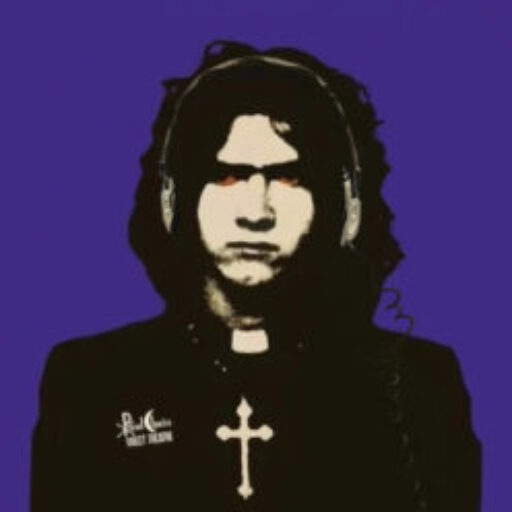
With the UK’s Warning returning to the stage and work beginning on a new album, this feature turns back to the record that has stayed unmoved. Watching from a Distance, released in 2006, stands with quiet certainty. Formed in the mid-nineties in Harlow, Essex, Warning was built around the voice and guitar of Patrick Walker, whose writing shaped the band’s identity – slow-moving, unadorned, and resolute-delivering doom metal stripped to its most human core. The songs speak plainly, and the emotion holds to a single shade: gray, a state of visibility without touch and memory that endures yet never resolves. What follows is a walk through that terrain, where the burden ever remains, carried up the hills and far away.
The kind of distance this album inhabits doesn’t emerge from disappearance or silence. It exists in a state of unresolved presence – a nearness that never falls apart, or a relationship that remains vivid and real, but refuses to return to its former shape. The person is still there, the voice still recognizable, and the gestures still familiar, yet the connection stays just out of reach. The ache comes from seeing and hearing with full clarity, holding it entire, and going no further.
That experience has a color. From the first chord to the last, the album stays inside a single atmosphere: gray, as a full emotional state. Because gray is what the world looks like when love continues without contact, and when memory continues without comfort. It’s the color of emotional space that neither widens nor closes – nothing collapses, but nothing brightens either…
The cover captures this completely. A man climbs a slope beneath a sky the same color as the ground. He leans forward, carrying a bundle of branches lashed together across his back. His figure is bent, but not defeated, as he carries on his climb. His gesture is without drama, almost daily in its passiveness. What is his destination? The sky gives neither shade nor horizon, and the hill offers no path. Gray encloses all.
He recalls Sisyphus without the weight of myth or the spark of revolt, the figure stripped of divine punishment or cosmic joke. There is no summit in view, no boulder in motion, no instant of victory or collapse, only a burden that rises from within while the image refuses to embrace and withholds any sign of choice. The act has continued past its reason, the carrying sustained simply because it endures, until labor settles into posture and posture shapes the form of the music.
But where Sisyphus repeats under force, this figure moves without narration, resistance or transcendence, only the quiet clarity of a single movement carried through gray space, without beginning or end, changing only in its shifting shades of gray. Gray in this context carries an emotional truth that flattens any contrast.
“Sometimes when I watch you, You seem like the same person that I once knew.”
“And watch from a distance, But never able to do more than I ever would.”
Gray sounds like repetition that doesn’t ask for attention. It moves with exposure free of demand, the voice steady and unbroken, the arrangement flat in its refusal to rise or fall. Surrender here turns to stillness, the guitar circling its figure, the drums moving at the same unhurried pace, the pauses between lines swelling until they feel tangible. The nakedness of feeling stays within a single tone, held in place without horizon, like the hill on the cover. Gray carrying everything in quiet suspension.
“I have laid down my armour, I have no sword at my side.”
“Yet here I stand, a broken soldier, shivering and naked, in your winter light.”
Gray moves with exposure without demand, the voice steady and whole, the arrangement offering no turn. Surrender here rests in stillness, the guitar circling the same figure, the drums keeping an even line, the pauses between phrases growing dense. Emotional nakedness lives in a single tone, presence filling the space. Gray holding everything in suspension without destination.
“I wish you were with me tonight.”
Gray moves like a sentence spoken over and over in the same breath, each return carrying identical pressure, pacing, and tone. The music holds its ground, never reaching toward chorus or climax, the refusal to climb giving it its gravity. The grayness lives in the absence of change, in the way the melody spans open space and leaves the voice alone within its own rhythm.
“Make a whole of my life, make my faces one that I want you to see.”
“Sometimes it makes me feel like I’m living out of time.”
Gray moves like a voice working to cohere, the instruments holding a mid-level hum, neither collapse nor peak, the vocal lines circling familiar tones with slight inflection. It feels like an attempt to find shape inside one’s own expression, the wish to align inner and outer tracing verses that stay in place. Gray keeps every motion suspended.
“I think of mornings we might spend if I came home to find you there.”
“And in my darkest moments, I want to feel that way again.”
Gray moves like time that refuses to become memory, holding imagined futures and unrealized presence in the same breath. The delivery folds hope and remembrance together, the voice tracing the same musical line while the instruments orbit a small set of points. Gray feels like emotional distance pulled taut over an image of warmth, seen in full detail, but never crossed into.
This album traces the outline of someone still visible, still near, still moving through your days, yet unreachable. Watching from a Distance endures through restraint, steady rhythm, and sustained tone, while the emotion holds in a continuous line, and the memory stays unchanged. The listener remains in the same gray expanse as the voice, and the character on the cover. The burden carried through to the end, and the words circling without resolution.
Patrick Walker carried that voice into 40 Watt Sun, and now, Warning returns, a new album taking form, the songs stepping back onto the stage. Watching from a Distance stays where it was. The man walks on. Branches press against his back, the slope continues, and the sky holds its place, inside the gray.